How can two homes five minutes apart feel like different seasons? In South Bozeman, the valley floor and nearby foothills often play by different weather rules. If you are moving to the Gallatin Valley or refining your property search, understanding these microclimates helps you choose a site, design intelligently, and plan for year-round comfort. In this guide, you will learn how sun, snow, wind, and access differ between valley neighborhoods and the foothills, plus practical design and maintenance strategies. Let’s dive in.
What drives Bozeman microclimates
Short changes in elevation around Bozeman create big differences in temperature, wind, and snow. The valley floor, lower foothills, and ridgelines each perform differently through the seasons.
Aspect matters too. South-facing slopes gather more sun all year, while north-facing slopes stay cooler and hold snow longer. Daily mountain–valley breezes add another layer. Upslope winds are common during the day, and cool air drains down at night. In winter, calm clear nights can trap cold air in low spots, creating valley inversions and frost pockets.
Local terrain also channels wind. Gaps and passes can strengthen gusts, and leeward slopes can see turbulence and drifting snow. Orographic lift near the mountains reshapes where precipitation falls, while wind redistributes snow into drifts or scours it from ridges.
Sun: valley vs foothills
Valley floor sun patterns
On the South Bozeman valley floor, tree cover and nearby buildings can shade homes, especially in established neighborhoods. During cold, stagnant spells, low clouds or fog may linger in the morning until an inversion breaks. Sheltered properties often retain warmth better overnight, which can reduce overnight heat loss.
For gardens and solar, many valley sites perform well, but watch for low-lying areas that hold cold air and delay spring planting.
Foothills sun patterns
On foothill slopes, aspect is everything. South-facing slopes get earlier and longer sun, so roofs and yards often melt faster in late winter. West and southwest aspects extend afternoon sun, which can benefit solar arrays and outdoor spaces. North-facing slopes stay colder, with longer snow cover and shorter growing seasons.
Sun-driven design choices
- Favor south or southwest roof planes for solar PV and passive solar gains. On exposed sites, choose mounting and attachment methods rated for higher winds.
- Plan outdoor living on sun-favored sides to extend shoulder-season use.
- In the valley, site gardens away from low spots, or use raised beds and frost protection where cold pools.
Snow: load and access
Valley floor snow behavior
Valley neighborhoods often receive uniform snowfall with less wind scouring. Snow tends to stay where it lands, so removal is predictable. Inversions can slow melting in shaded areas, and sidewalks in low spots may ice over, calling for diligent sanding and de-icing.
From a structural standpoint, roofs must meet local snow-load requirements. Because valley winds are typically lighter, drifting is less extreme than on exposed slopes, but shaded eaves can still develop ice if insulation and ventilation are not dialed in.
Foothill snow and drifts
Foothill ridgelines may show less settled snow due to wind scouring, yet leeward slopes and building corners often collect deep drifts. Steeper, south-facing roofs shed snow faster, reducing prolonged roof loading but increasing the risk of sliding snow onto entries and walkways.
Road access can be more challenging. Private or steeper drives require attentive plowing, traction planning, and sometimes equipment or service contracts to keep access reliable through storms.
Roof and access planning
- Confirm roof design meets local snow-load standards and accounts for drift patterns around chimneys, valleys, and step-downs. Always verify requirements with Gallatin County Building Services or a licensed structural engineer.
- Use snow guards or rails where sliding snow could impact paths, decks, or vehicle areas.
- Consider heated mats at critical entries and robust gutter, insulation, and ventilation details to reduce ice dams.
Wind: comfort and costs
Valley neighborhood winds
Many South Bozeman neighborhoods are naturally sheltered by terrain and tree cover. That can mean gentler average winds, though localized gusts can still develop along streets and gaps. In strong winter inversions, winds often lighten further.
Foothills and ridgelines
Foothill properties typically see stronger, gustier winds. Exposure increases heat loss through infiltration and can dry landscaping faster. Wind also drives drifting snow and can push ice into vulnerable spots.
Energy and comfort strategies
- On wind-exposed sites, emphasize tight air sealing, high R-values, and careful window and door installation to cut infiltration.
- Limit large west-facing glass unless you have shielding or deep overhangs.
- Size HVAC for local conditions and consider cold-climate heat pumps for efficient heating performance.
Other factors to weigh
- Frost pockets: Low-lying valley areas collect cold air overnight. Expect later last frosts and earlier first frosts.
- Freeze–thaw cycles: Sun-exposed foothill slopes may see more frequent thawing and refreezing, which can age exterior materials faster.
- Wildfire exposure: Foothill parcels usually face higher wildfire and ember risk. Defensible space and fire-resistant materials are essential.
- Utilities and outages: Outlying foothill sites can see more frequent or longer outages in wind and snow events. Backup power planning may be prudent.
- Road maintenance: City streets often receive municipal plowing. Many foothill roads are private with shared maintenance responsibilities.
Site selection tips
Lower-maintenance living
- Choose sheltered valley lots with good southern exposure but avoid obvious frost pockets.
- Favor neighborhoods with municipal snow removal and reliable utilities.
- Prioritize shorter, flatter driveways for predictable winter access.
Views and solar gain
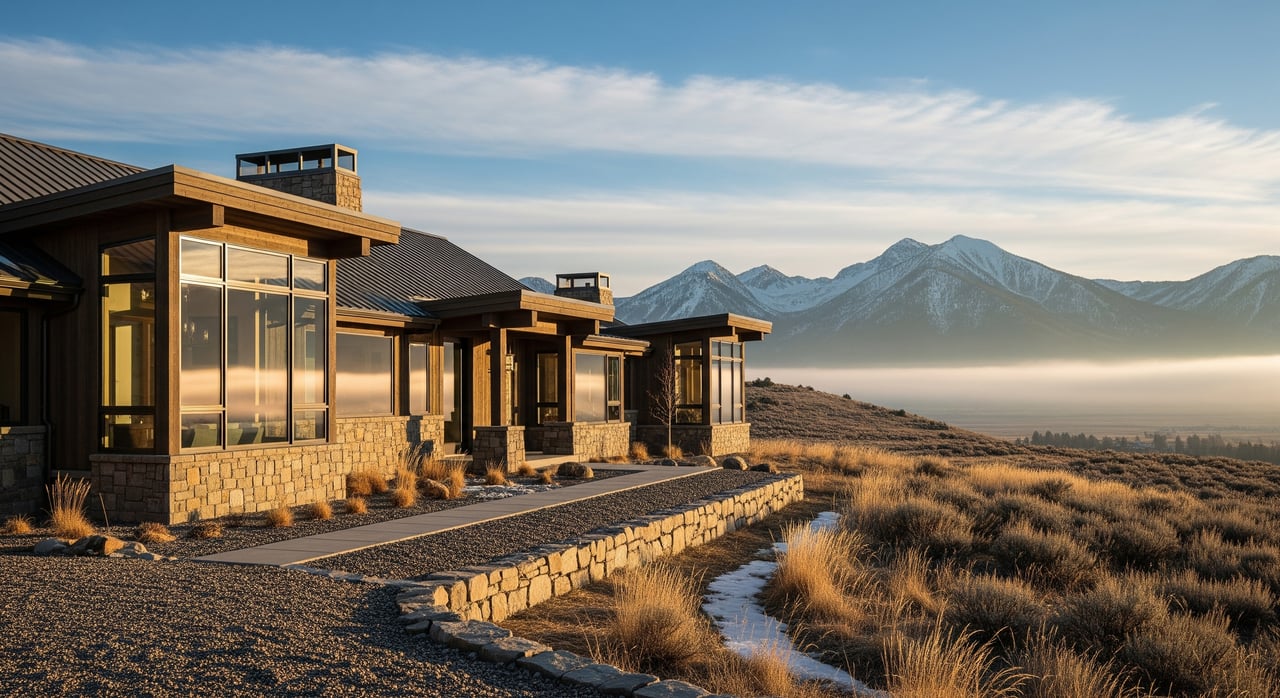
- South or southwest foothill parcels deliver great sun and views, with the tradeoff of higher winds and variable drifting.
- Confirm you can manage winter access with road grade, plowing plans, and equipment.
Privacy and rural feel
- Understand private road agreements, plowing schedules, and emergency response timelines.
- Verify utility reliability and consider solar plus battery or generator backup if outages are a concern.
Wildfire-sensitive buyers
- Favor sites where you can create and maintain defensible space.
- Select noncombustible roofing and ember-resistant vents and confirm insurance requirements early in due diligence.
Smart design choices
Orientation and glazing
- Emphasize south-facing windows for winter gains and daylight while sizing overhangs to control summer heat.
- On windy sites, reduce large west exposures or add windbreaks and exterior shading.
Roof and snow management
- Use steeper pitches where quick shedding is desirable. For low-slope roofs, specify stronger structural design and snow retention.
- Add snow guards above walks and drives to protect people and vehicles.
- Design gutters and ventilation for ice control, and ensure warm roof assemblies are detailed to prevent ice dams.
Structure and foundation
- Build to local frost depth and plan for ground movement from freeze–thaw.
- On slopes, engineer drainage, retaining, and spring thaw management to protect foundations and hardscape.
Windproofing and energy
- Air seal, insulate, and detail penetrations meticulously on exposed sites.
- Specify high-performance windows and reinforced doors with quality weatherstripping.
Wildfire-ready materials and landscape
- Select noncombustible roofing and ember-resistant vents.
- Establish defensible space per local guidance, with smart plant selection and spacing.
- Keep combustible materials away from structures and maintain clear, accessible driveways for responders.
Maintenance by location
Valley floor routine
- Stay on top of shoveling and de-icing along shaded drives and walks.
- Prune trees to improve desired winter sun.
- Check gutters and downspouts for freeze issues after storms.
Foothill routine
- Expect more frequent exterior touch-ups from wind and freeze–thaw wear.
- Maintain snow removal equipment or service contracts, and keep emergency supplies for potential outages.
- Inspect roof, siding, and flashing for wind-driven damage after high-wind events.
Universal upkeep
- Inspect roofs mid-winter for load and ice.
- Check window and door seals seasonally.
- Add or maintain windbreaks, such as conifers or engineered fencing, to reduce wind speeds and drifting.
Due diligence checklist
Questions for the seller or listing agent
- Who maintains and plows the access roads year-round, and are there private agreements or HOA responsibilities?
- What is the recent history of power outages and their causes?
- Do drifts or sliding snow impact specific entries, decks, or drive areas?
- Any history of ice dams, roof repairs, or structural issues tied to snow load or frost?
- What wildfire mitigation steps have been taken, and are there insurance conditions related to wildfire?
On-site checks and inspector conversations
- Look for low depressions, plant frost damage, or repeated ice as signs of cold-air pooling.
- Note tree shading on south roof planes that could reduce solar output or slow snowmelt.
- Review roof pitch, eaves, and flashing for drift and slide risks.
- Confirm foundation depth, drainage, and any evidence of frost heave.
- Ask about wind exposure and whether siding or roofing shows wind wear.
Documents and data to request
- Road maintenance and snow removal policies for the specific street or road.
- Utility outage records if available.
- Building permits and structural plans, especially roof framing and snow-load notes.
- Wildfire risk assessments or community mitigation plans for foothill purchases.
Quick site scoring
- Solar: South or southwest exposure with minimal winter shading is a plus.
- Wind: Ridge positions without windbreaks suggest higher exposure.
- Snow access: Steep driveways and long private roads raise winter risk.
- Frost: The lowest part of the terrain often indicates a frost pocket.
The bottom line
South Bozeman’s valley neighborhoods typically offer easier access, lighter winds, and predictable snow clearing, with the caveat that low spots can be colder and shadier in winter. The foothills deliver bigger views and stronger solar potential on south slopes, but you will balance that against wind exposure, drifting, wildfire considerations, and more demanding access.
Evaluate each parcel by aspect, slope, wind exposure, snow behavior, and access responsibilities. Then align design choices and maintenance plans to the site. If you want a local, construction-savvy perspective as you refine your search, connect with Mike Schlauch Platinum Properties for a private consultation and a smart, site-specific plan.
FAQs
What is a Bozeman microclimate and why does it matter?
- A microclimate is a small area with distinct weather patterns driven by terrain, aspect, and wind, and it affects comfort, energy costs, snow management, and maintenance.
How do south-facing foothill slopes affect solar potential?
- South and southwest slopes get earlier, longer sun that can boost PV output and passive solar gains, though panel mounting must account for higher wind exposure.
What should I ask about winter access for a foothill home?
- Ask who plows the road, whether it is public or private, how steep the driveway is, and what equipment or service is in place for storms.
Are foothill homes in Gallatin County at higher wildfire risk?
- Foothill properties typically face higher wildfire and ember exposure, so defensible space and noncombustible materials are important and may affect insurance.
How can I spot a frost pocket on a valley lot?
- Look for low terrain, plant frost damage, or repeated ice buildup in the same areas, which signal cold-air pooling and later spring warm-up.
Does wind exposure raise heating and cooling costs?
- Yes, wind drives infiltration that increases HVAC loads, so tight air sealing, high insulation, and quality windows are crucial on exposed sites.