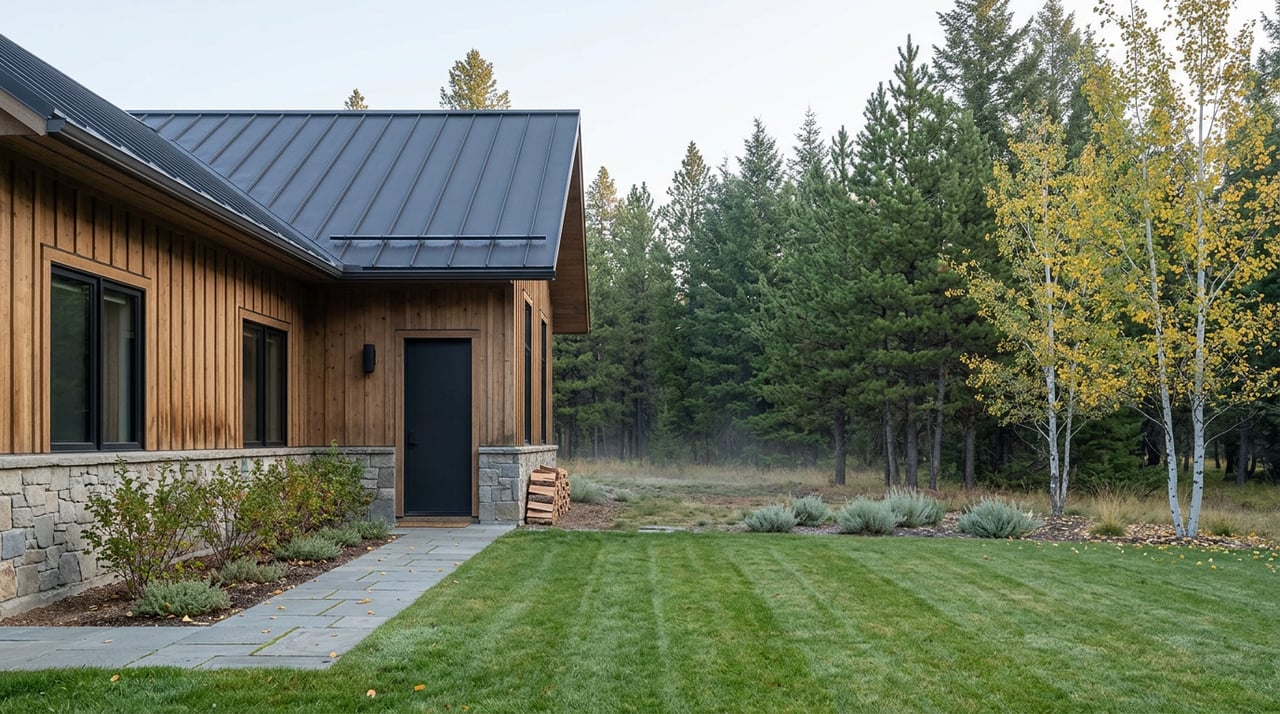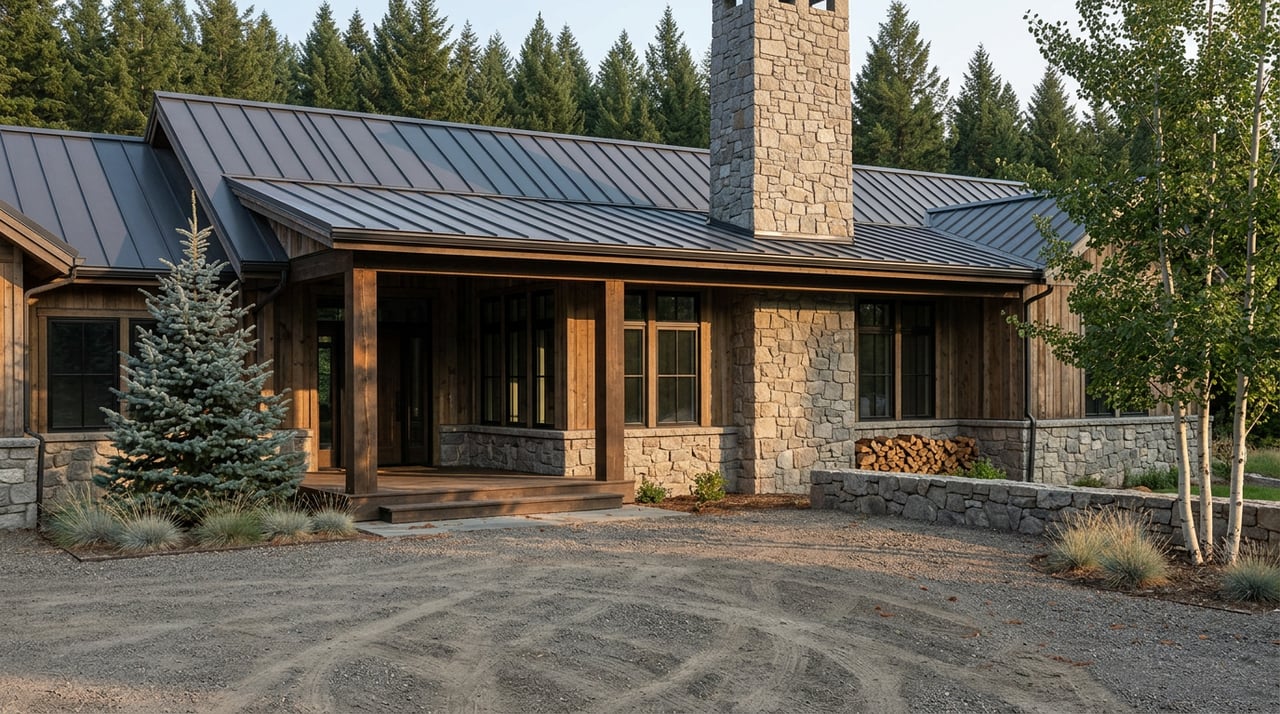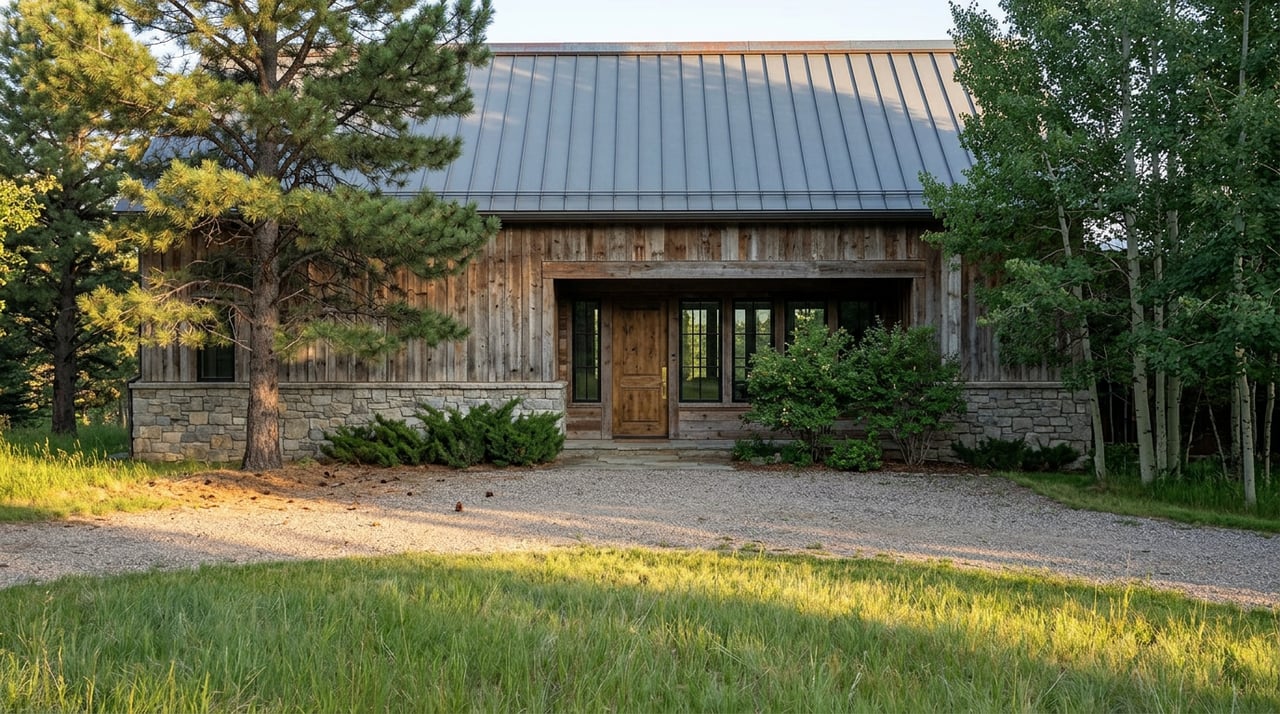
A four-million-dollar post-and-beam on three acres in Triple Tree Ranch and a modest ranch home a half mile away on Goldenstein Lane can share the exact same wastewater arrangement: a tank, a drainfield, and a county permit filed sometime in the last six decades. The listing sheet won't mention it either way. Square footage, lot size, and view corridor get top billing in South Bozeman marketing copy. What actually treats the sewage under an eleven-thousand-square-foot great room rarely comes up until an inspector, a lender, or a buyer's attorney asks.
That's the thesis worth sitting with before writing an offer in this part of Bozeman: most of South Bozeman's marquee large-lot neighborhoods, the ones built on the promise of acreage and privacy, sit outside the city's sewer boundary. That means individual or shared septic systems and private wells are the norm, not the exception, across Triple Tree Ranch, Eagle Rock Reserve, Sundance Springs, and the cluster of Hyalite-side subdivisions south toward the canyon. Montana law requires sellers to disclose what they know about those systems. It does not require anyone to verify what's actually on file with the county. That gap is where the real due diligence lives, and it's worth understanding before it becomes a contingency deadline.
What the Listing Doesn't Say
South Bozeman's large-lot subdivisions were built for a specific kind of buyer: someone who wants Bridger Mountain views, trail access, and enough land to feel like the neighbors are a suggestion rather than a fact of life. Eagle Rock Reserve delivers that at scale, with roughly 20-acre parcels spread across more than 700 total acres, a community equestrian center, and design covenants that keep homes off the ridgelines so the terrain reads as untouched from a distance. Triple Tree Ranch works the same idea at a tighter grain, with estate lots generally running one to just under four acres, trail frontage, and land that backs up to state ground.
None of that acreage comes with a guarantee of municipal sewer. Land at that scale, outside city limits, is built around private infrastructure by default. That's not a flaw in these neighborhoods. It's the tradeoff that buys the privacy and the pasture. But it does mean the wastewater question that a downtown Bozeman condo buyer never has to ask becomes a real line item for anyone closing on acreage south of Kagy Boulevard.
Two Laws, One Blind Spot
Montana didn't have a general seller disclosure requirement until relatively recently. The legislature passed the current statute, codified at MCA 70-20-502, in 2023, requiring sellers of residential property to disclose adverse material facts they actually know about, including anything affecting water service, the water source, and the wastewater treatment system serving the home. Septic and well problems sit right alongside roof, foundation, and electrical issues on that list.
More specific still is Montana's Septic System Disclosure Act, passed back in 2011, which requires a signed disclosure statement on any property sold with a septic system. The statutory language is exact enough that it's still worth reading in its own words. Buyers must acknowledge, in writing, before or at the same time as an offer:
"The buyer may request an inspection of the septic system and any associated drainfield or infrastructure"
That single sentence is doing more work than it looks like. It confirms the buyer's right to ask for an inspection, but it also quietly confirms that nobody is obligated to perform one. Both statutes share the same structural limit: they require sellers to disclose what they already know, not to go find out what they don't. The disclosure form protects a seller's honesty. It does nothing to protect a buyer's ignorance of the county's actual paper trail.
Where the Real Record Lives
That paper trail exists, and it belongs to Gallatin County, not to the listing agent. The Gallatin City-County Health Department maintains a public wastewater permit search that indexes every individual, shared, and multi-user septic permit issued in the county. The catch is the start date: the department began issuing wastewater treatment permits on January 1, 1966, so anything older simply isn't in the system.
Searching the database takes patience. Records are indexed by owner name, subdivision, certificate of survey number, or section-township-range, and a result marked "No Images" means the permit exists on paper but hasn't been scanned. Getting a copy means a trip to Room 108 at 215 West Mendenhall Street in downtown Bozeman, where black-and-white copies run a quarter and color runs fifty cents. It's a small errand with a large payoff: it turns a seller's disclosure statement, which reflects memory and good faith, into a verified county record that reflects what was actually permitted and when.
Three Neighborhoods, Three Verification Profiles
Not every South Bozeman subdivision asks a buyer the same questions. Lot size and design review both change what's worth checking before an offer goes in.
| Neighborhood | Typical Lot Size | What Tends to Be True | Worth Verifying |
|---|---|---|---|
| Triple Tree Ranch | 1 to 3.8 acres | Individual well and septic per lot, established HOA | Age and pump history of the specific system, not just the subdivision's general reputation |
| Eagle Rock Reserve | Roughly 20 acres | Conservation-driven design review, larger building envelopes, more remote siting | Whether the site evaluation on file matches the current building footprint, since larger parcels often see additions over time |
| Hyalite-side subdivisions (Hyalite Foothills, Hyalite View Estates, New Hyalite View) | Highly variable, from roughly one acre up | Wide range of product types and permit histories within the same general area | Confirm the exact subdivision and certificate of survey, since assumptions that carry from one Hyalite-side property to the next often don't hold |
We've written before about how Triple Tree Ranch, Eagle Rock Reserve, and the Hyalite-side neighborhoods differ in lot structure and HOA feel. The septic question adds another layer to that same comparison: the more variable the neighborhood, the more a buyer needs the specific parcel's file rather than a general sense of how the area typically builds.
The Rejected Subdivision Next Door
The reason this isn't an abstract worry showed up in the county's own record a few years ago, right next to one of these established neighborhoods. In 2022, Gallatin County commissioners Joe Skinner and Scott MacFarlane rejected a proposed subdivision adjacent to Hyalite Hills, one designed with individual septic tanks and absorption fields on every lot. The Gallatin Local Water Quality District flagged the area's water table as shallow and susceptible to contamination from those same septic fields. Even after the county planning board granted two waivers earlier in the process, the commission still voted the project down, citing unresolved questions about how wells, septic systems, and irrigation would coexist on that ground.
That decision matters to anyone buying nearby, not because it predicts trouble on an existing, permitted lot, but because it confirms the county has already identified this specific pocket of the Hyalite corridor as one where groundwater and septic capacity deserve real scrutiny. A buyer evaluating raw acreage or planning a major addition in that same area inherits the same geology the rejected project ran into.
What This Costs, and Who Handles It
Verifying a system or expanding one both cost real money, and the numbers are worth knowing before they show up as a surprise. A Gallatin County-licensed septic system designer and site evaluator quotes roughly $2,800 for a full septic design and site evaluation on most projects, the kind of work triggered by a new build, a major addition, or a septic system old enough to need replacement. Every installation also requires a Gallatin County Registered Installer on site, and a site evaluation from a Qualified Site Evaluator before the county issues a permit at all.
For an existing system that just needs a pumping and a health check ahead of closing, the work is smaller and faster. Companies serving the Bozeman area, including TLC Services and Advanced WasteWater Specialists, handle that routine maintenance and can usually produce records the county itself may not have scanned yet. If a South Bozeman purchase involves adding a bedroom, a guest structure, or an accessory dwelling unit, the county's Land Use Permit process treats that as new construction, which can mean a fresh look at whether the existing system has the capacity to support it.
Before the Offer Goes In
A few questions are worth asking before earnest money changes hands on any South Bozeman property outside city sewer.
- Ask the seller for the septic permit number, then pull the county record independently rather than relying on memory or the disclosure form alone.
- Ask when the tank was last pumped and request the receipt, not just a verbal confirmation.
- If the plan includes any addition or new structure, budget for a fresh site evaluation rather than assuming the existing pumping receipt covers it.
- If the parcel sits near Hyalite Creek or in a similarly low-lying pocket, ask directly whether any past county review flagged water table concerns in that specific area.
A Few Direct Answers
Does Montana require a septic inspection before a sale closes? No statewide law forces one. The 2011 disclosure act requires the seller to provide a signed acknowledgment and confirms the buyer's right to request an inspection, but the inspection itself remains optional unless a lender requires it as a condition of financing.
Are all of South Bozeman's luxury neighborhoods on well and septic? Not universally, and the variation is exactly why the subdivision name matters. Large-lot communities like Triple Tree Ranch and Eagle Rock Reserve are built around private systems by design. Some closer-in Hyalite-side properties may have different arrangements, which is another reason to verify the specific parcel rather than assume based on the general area.
How far back do Gallatin County's septic records go? The county began issuing wastewater treatment permits on January 1, 1966. Anything installed before that date won't appear in the searchable database, even if the system is still in use today.
Buying acreage in South Bozeman means buying into land that was built for privacy, not municipal convenience. That's the appeal, and it's also the reason the county file matters more here than it does almost anywhere else in the valley. Mike Schlauch's background in construction and development means reading that file, and knowing what it should say, is part of the job. If you're weighing a specific property in Triple Tree Ranch, Eagle Rock Reserve, or one of the Hyalite-side neighborhoods, Mike Schlauch Platinum Properties can help you get the paperwork answered before it becomes a closing delay. Schedule a private consultation to start with the file, not just the floor plan.